Family and business
Why Wealthy Families Need a Constitution
The questions a family charter settles when cousins share an interest in the same wealth.
Family governance refers to the structures and processes families use to organise themselves and guide relationships with their family business or wealth. It has a number of different dimensions, including those in this figure:
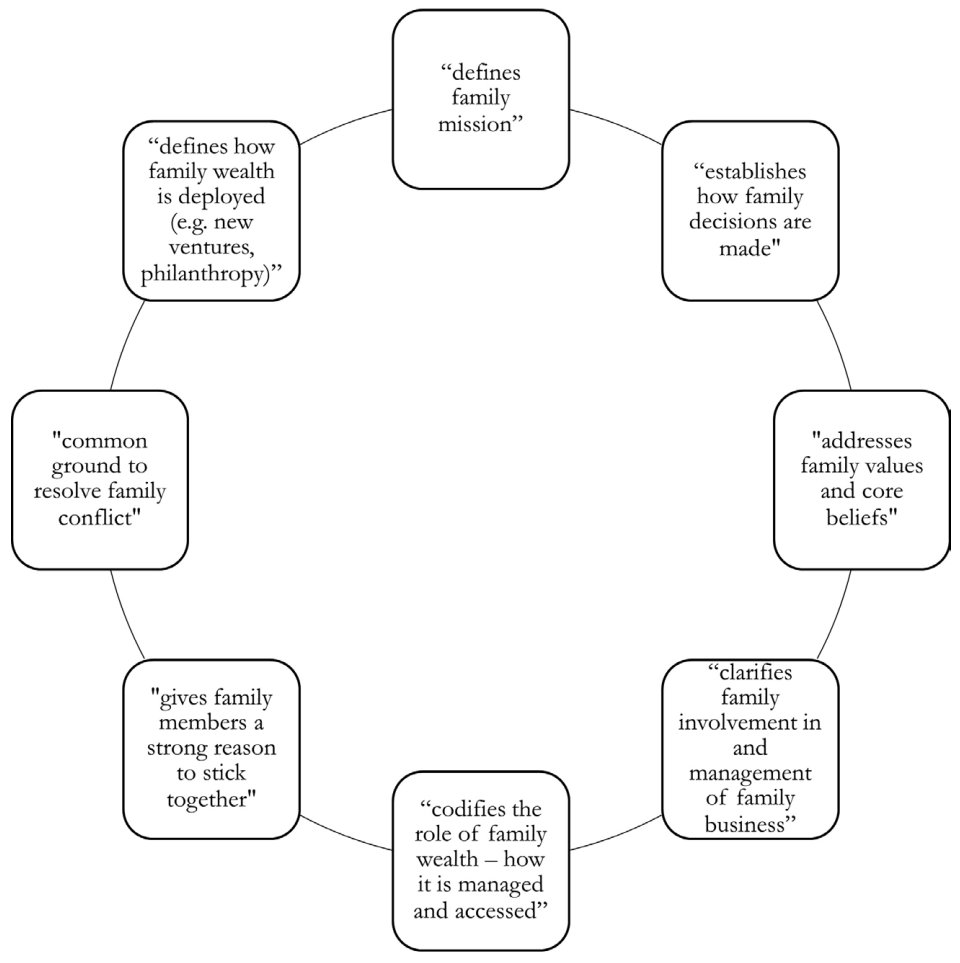
Family governance becomes increasingly important as family wealth, size and complexity grows. A family unit of two adults and two young children with no exterior claims on their wealth would require little management. However, governance typically becomes critical at the point when cousins share an interest in family wealth. When this happens, the divergence in age and interests can become significant and create opportunities for things to go wrong.
Family charter
Establishing clear governance increases the potential for family harmony, unity and strong communication. But, each family will need to build a consensus around what is important. What are your overall family goals and values? Can you develop a code of conduct and general rules around the management of wealth? How will you resolve disputes? These questions can help shape a family charter – an overall governing document for a family.
As you would expect, each family charter is unique, but typically, the contents will include the following elements:
Overall strategy / guiding principles
- Who is part of the family charter and why?
- Long term objectives of family
- Family values
- Family code of conduct: principles for doing business together, protection of reputation, how to communicate and make decisions appropriately and respectfully, commitment to meet
Ownership governance
- Voting rights
- Transfer of rights
- Inheritance of rights
- Stalemates
- Dispute / conflict resolution
- How charter can be amended or dissolved, if at all
- Appointment and role of family office
Family governance
- Membership and operation of family meetings
- Election and role of family council
- Involvement in family business
- Principles and procedures for family members to access family wealth – capital and income
- Family involvement in new entrepreneurial activity and philanthropy
- Reporting requirements
Corporate governance, where family business still exists
- Role and appointment of board of directors, including family representation
- Role and appointment of senior management
- Dividend policy
- Philosophy and approach to mergers and acquisitions
- Employment and progression of family members in business
- Use of equity to incentivise non-family member employees
After arriving at a consensus and agreeing on the contents of the family charter, it’s vital to maintain a healthy dialogue within a family. An external coach or facilitator can play an important role in supporting constructive communication. They can help ensure that this is a positive journey for a family where appropriate stakeholders’ voices are heard and familial bonds are renewed. This is a far more preferable outcome than arguments and disagreements.
Adapted from Leadership in Wealth (2023).
This article is for general information and education. It does not provide personal investment advice.